Restoring Old Family Photos: Quality, Ethics, and Privacy
Discover how old family photos can be restored responsibly, with attention to image quality, consent, privacy, and ethical AI use.
2/1/20268 min read
Introduction: The Importance of Restoring Old Family Photos
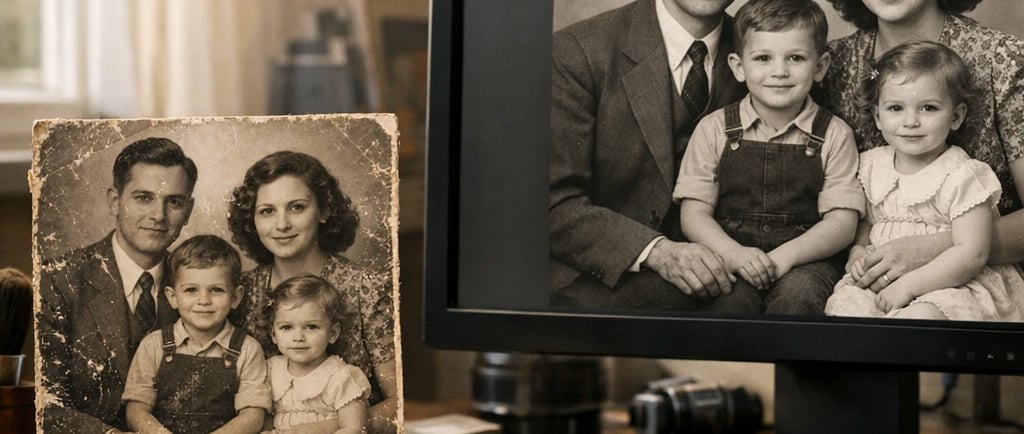
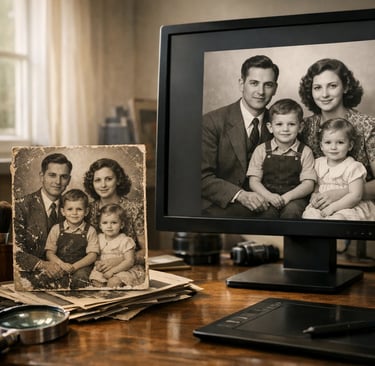
Restoring old family photos holds profound emotional significance for many individuals and families. These images serve as vital records, capturing moments in time that reflect familial bonds, shared experiences, and personal histories.
Every photograph tells a story, connecting generations through visual narratives. As we navigate through life, these cherished artifacts remind us of where we came from, honoring the past while enriching our understanding of our identities in the present.
In an era where digital media predominates, the physical legacy embodied in old family photos becomes increasingly valuable. These images often evoke nostalgia, rekindling memories of loved ones and significant life events. Restoring these photos allows us to preserve those memories, not only for ourselves but also for future generations, fostering a continuous connection to our heritage.
The act of restoring a photo can be seen as an act of love and respect for our ancestors, acknowledging their lives and experiences.
However, while the importance of these photographic restorations is clear, it is essential to approach them with a keen sense of ethics. The restoration process can involve delicate decision-making regarding authenticity and the representation of individuals captured in those images.
Ethical considerations weave through every step, from the techniques employed to the implications of sharing restored photographs publicly. As we delve into the process of photo restoration, it is critical to recognize that these images are not merely objects; they are imbued with personal significance and cultural weight.
Thus, the journey of restoring old family photos entails not just technical skill but also a deep reverence for the histories they encapsulate. Going forward, we will explore various aspects of photo restoration, including methodologies, ethical practices, and the privacy concerns associated with these invaluable family heirlooms.
The Emotional Value of Family Photographs
Family photographs serve as powerful repositories of memories, encapsulating precious moments that often define our personal histories and familial identities.
The emotional value of these images extends beyond mere visuals; they offer a tangible connection to our past, bridging generations and evoking nostalgia. Restoring old family photos can not only enhance their aesthetic appeal but also revitalize the memories attached to them.
Many individuals find that restored photographs breathe new life into their family's history.
For instance, consider the testimonial of Sarah, who recently restored faded images of her grandparents' wedding. She shared, "Seeing the colors come back to those pictures made me feel like I was stepping back in time. It reignited not just my memories of them but also the stories they told about their youth.” Such personal anecdotes underscore the deep emotional connections that family photographs can cultivate among relatives.
Moreover, restored images can help reconcile with loss.
When Mark restored photographs of his late father, he expressed, "Those images allowed me to remember my dad not just as he was at his end, but during joyful times in his life. Each photo beckoned a story, a lesson that he shared with me.” These narratives, encapsulated within photographs, offer comfort and foster an understanding of where we come from.
Ultimately, the emotional significance of family photographs cannot be overstated. They document the unique stories of our loved ones, serving as treasured artifacts that preserve our lineage. As these images are restored, they not only enhance visual clarity but also reaffirm our bonds, allowing us to honor and remember those who have shaped our lives.
Understanding Privacy and Consent in Photo Restoration
Restoring old family photos can be a rewarding process, yet it intricately intertwines with issues of privacy and consent. When photographs contain images of living individuals, it becomes paramount to obtain permission before proceeding with any restoration work.
This respects the rights of those individuals and acknowledges their autonomy over how their image is used, especially in an age where sharing on social media is prevalent.
The legal implications of restoring and sharing photographs without consent can be significant. Depending on the jurisdiction, individuals may have the right to control the use of their likeness, thereby necessitating proper permissions.
Notably, failing to obtain consent not only exposes restorers to potential legal repercussions but can also lead to strained familial or social relationships. Thus, engaging in open dialogues with family members about the intent behind restoration and how the photos will be used is advisable.
Moreover, ethical considerations should drive decisions regarding photo restoration. When restoring photos that depict deceased individuals, the conversation about privacy shifts toward the family of the deceased.
While consent from the individuals in the photographs isn’t possible, the family members might have their own views on how these images should be handled and shared. Therefore, involving them in the restoration process can ensure that their wishes are respected, which is an ethical practice when it comes to preserving family legacies.
In conclusion, consent and privacy are essential components when restoring old family photographs. Respecting these principles promotes ethical practices and helps maintain trust within families, as well as compliance with legal standards.
Thus, as restorers engage with such poignant materials, careful consideration of these issues will enhance both the process and outcome of photo restoration.
The Risks of Non-Reuse of Restored Images
Restoring old family photos has become increasingly popular with advancements in technology, particularly through the use of artificial intelligence (AI).
While restoring these images can offer significant value in terms of preserving family history and memories, it is essential to consider the ethical implications surrounding the reuse of such restored images. The principle of non-reuse is particularly vital in contexts where personal photographs are concerned.
One of the primary concerns is that restored family images may not have the consent of the individuals portrayed, especially when it comes to distributing or displaying these images publicly. The act of redistributing restored images without explicit permission raises important ethical questions about privacy.
Individuals depicted in these photos, or their descendants, have rights that should be honored. This includes the right to control how their likeness is used and shared, particularly in a digital landscape where images can spread rapidly.
Furthermore, the potential misuse of these restored images cannot be ignored. Once a family photo is restored and shared, it can fall into unintended hands. This could lead to scenarios where individuals' images are used for commercial purposes, deepfake technology, or other exploitative practices.
Such misuse can infringe on personal privacy and could potentially cause emotional distress to the subjects or their families.
In light of these factors, it is crucial that individuals and companies involved in the restoration of family images adhere to ethical guidelines that prioritize the non-reuse of these restored images without consent. By doing so, not only do they protect the privacy of the individuals involved, but they also foster a culture of respect and dignity surrounding personal photographs.
Ultimately, understanding the risks associated with the non-reuse of restored family images can guide responsible practices that honor the significance of these historical artifacts.
Restoring family photos is an intricate process that involves several stages aimed at rejuvenating old images while preserving their integrity. Initially, the restoration process begins with a thorough assessment of the original photographs, determining the extent of damage and the type of restoration required.
This phase is crucial as it sets the standard for the quality of the restoration efforts.
Once the assessment is complete, the next step is to digitize the photographs. This involves using high-resolution scanners to create a digital copy of the image, which allows for detailed editing without compromising the original. The digital format not only facilitates easier manipulation but also serves as a safeguard against further deterioration of the physical copy.
Following digitization, various restoration techniques can be employed, including color correction, artifact removal, and scratch repair. Specialized software tools are used to enhance the quality of the images, allowing for adjustments in brightness, contrast, and saturation.
It's essential that these enhancements do not alter the historical authenticity of the photographs, maintaining a faithful representation of the original appearance.
Quality control is integrated at every stage of the restoration process. Periodic reviews ensure that the techniques employed yield the highest quality results. Restoration professionals reference established guidelines to evaluate the effectiveness of their work, focusing on the clarity and vibrancy of the restored images.
Feedback loops may involve consultations with family members or historians, thereby ensuring that the restored photos align with the family's expectations and historical context.
Moreover, maintaining the integrity of the original photograph throughout the restoration process is paramount. Specialists employ non-destructive methods to ensure that any alterations made will not affect the original material. This commitment to quality and ethics underscores the dedication to preserving family history for future generations while providing a visual legacy.
Deletion After Delivery: Protecting Privacy
When utilizing the services of photo restoration professionals, one paramount concern for families is the privacy and security of their cherished images.
It is essential for service providers to implement a policy of deleting restored images from their databases immediately after the delivery of these files to the clients. This practice not only ensures that restored images do not remain vulnerable to unauthorized access but also reinforces the trust between service providers and their clients.
The act of removing restored photographs from databases post-delivery serves multiple purposes.
Firstly, it helps prevent any potential leakage that could negatively impact the family’s privacy. Restored images often capture personal and intimate moments, making it crucial that they do not exist on external servers any longer than necessary. The sensitive nature of these memories, combined with the digital age's inherent risks, necessitates that families maintain control over their own photographs.
Additionally, deleting the images can help mitigate the risk of data breaches that could lead to unauthorized use of family photos. In an era where data breaches are increasingly common, families must be proactive in safeguarding their memories. A robust deletion policy can significantly reduce the potential for restored images being misused in any way.
Furthermore, by adopting such practices, service providers demonstrate their commitment to ethical standards and respect for clients’ wishes. Families should inquire about a company’s policy before entrusting them with their photographs, ensuring they are comfortable with how their restored images will be managed.
Transparency in this regard not only fosters trust but reinforces the ethical framework within which these services operate.
Conclusion: Balancing Emotion, Ethics, and Quality in Photo Restoration
Restoring old family photos is an intricate process that requires careful consideration of various factors, including emotional significance, ethical standards, and the quality of restoration techniques.
The emotional value tied to photographs can often evoke cherished memories and feelings, making it essential for individuals to approach the restoration process with sensitivity. Every aged photograph captured a moment in time, representing family history, connections, and cherished memories that deserve respect during the restoration process.
Furthermore, ethical considerations in photo restoration should not be overlooked. It is crucial for restorers to maintain honesty regarding the extent of modifications made to a photo. Transparency about the methods used and preserving the photo’s historical context goes a long way in maintaining its integrity.
This consideration ensures that the restoration work honors the original while enhancing its visual appeal, rather than altering its essence.
Quality is another paramount aspect of photo restoration. Utilizing advanced techniques and technologies can significantly enhance the clarity and detail of these treasured images. However, one must strike a balance between quality and authenticity.
High-quality restorations should be true to the original image in terms of color, tone, and detail, ensuring that any enhancements are subtle and respectful of the photo's history. A deeply connected understanding of these elements allows for a comprehensive restoration process.
As individuals embark on their photo restoration journeys, it is essential that they remain mindful of the emotional, ethical, and quality aspects. By carefully balancing these elements, one can ensure that old family photos are not just restored but revitalized, providing future generations with a tangible connection to their heritage.
FaceSwapMe
Private, consent-based AI face and media processing.
Every request is reviewed by a human operator and handled discreetly. Files are deleted after delivery.
© 2026. FaceSwapMe. All rights reserved.
Quick Links
Legal & Privacy
Contact & Availability
contact@face-swap.me
Response time: within 24–48 hours

No data is shared. No content is stored. No processing begins without approval.