Text-to-Voice Explained: Professional AI Voice vs DIY Tools
Compare professional text-to-voice services with DIY AI tools, focusing on quality, clarity, control, and responsible voice generation.
2/1/20267 min read
Introduction to Text-to-Voice Technologies
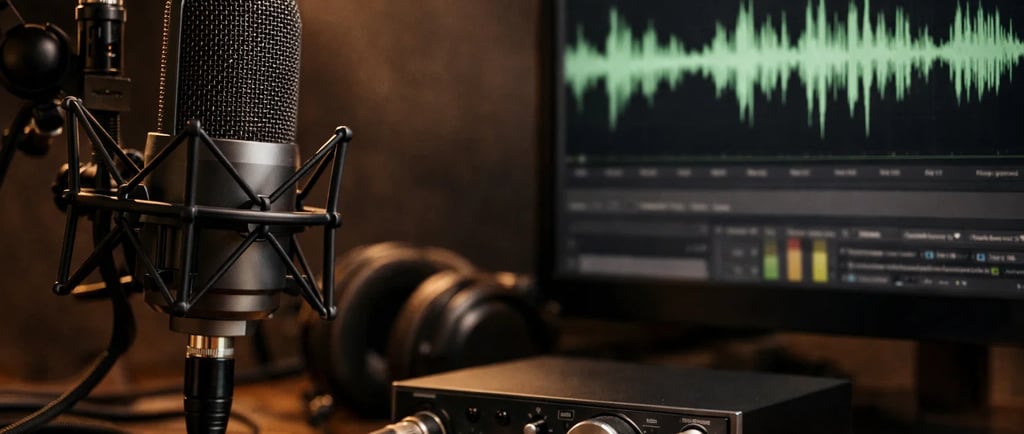
Text-to-voice technology, often referred to as text-to-speech (TTS), is a form of assistive technology that converts written text into spoken words.
This functionality relies on linguistic algorithms and artificial intelligence to produce natural-sounding voice output, making it an invaluable tool across various sectors. The technology serves a diverse range of applications, from content creation and accessibility initiatives to educational tools and voice-assisted interfaces.
The process typically begins with the input of textual content, which is then analyzed for its linguistic components, including punctuation, intonation, and pitch.
Following this analysis, the TTS system synthesizes the text using pre-recorded or generated voice samples. This method has evolved significantly over the years, transitioning from rudimentary robotic voices to more sophisticated models that can replicate human nuances, accents, and emotions.
In recent years, the importance of text-to-voice applications has surged, particularly in enhancing accessibility for individuals with reading disabilities or visual impairments.
For instance, TTS tools are widely utilized in educational settings to assist students in engaging with learning materials. These tools can facilitate a more inclusive environment by enabling all learners to access content in an auditory format.
Moreover, in the realm of content creation, text-to-voice technology is increasingly adopted for creating audiobooks, podcasts, and voiceovers for multimedia presentations. This adoption illustrates the growing recognition of the value that TTS systems bring in terms of efficiency and cost-effectiveness.
As technology continues to improve, the line between professional AI voice solutions and DIY tools becomes increasingly significant to explore, each offering distinct advantages for users.
Quality of Voice: Professional vs DIY Tools
Voice quality serves as a crucial differentiator between professional AI voice services and DIY text-to-voice tools. When assessing the voice output, several characteristics come into play, including naturalness, richness, and human-like intonation.
Professional AI voice services are specifically engineered to emulate human speech patterns closely, thereby delivering a more authentic listening experience.
Naturalness in voice production is often achieved through advanced algorithms and extensive training on diverse datasets of human recordings. These professional services utilize deep learning techniques that allow them to understand the subtleties of language, such as rhythm and emotional undertones.
In contrast, many DIY tools tend to produce more robotic-sounding voices. While they may be sufficient for basic tasks like reading out text, the lack of emotional expression and nuance can detract from the overall effectiveness and engagement of the message being conveyed.
The richness of voice quality adds depth and texture that can significantly enhance the listener's experience. Professional services often offer multiple voice options, including various accents and speech styles, allowing users to select a voice that aligns with the intended message.
This adaptability is particularly important for businesses aiming to convey particular branding or emotional tones. On the other hand, DIY tools frequently feature limited voice selection, which may result in a monotonous presentation of information.
Lastly, human-like intonation plays a pivotal role in the perception of voice quality. Professional AI voices feature expert voice modulation, incorporating inflections and pauses that make their speech sound more conversational and relatable.
In contrast, many DIY tools struggle to replicate these elements, leading to a flat delivery that can hinder audience retention. Overall, while DIY text-to-voice solutions can fulfill basic needs, the superior voice quality provided by professional services results in a more engaging and effective auditory experience.
Tone Control: Customization Capabilities
In the realm of text-to-voice technology, the ability to manipulate tone effectively is paramount. Professional AI voiceover solutions present extensive customization capabilities that allow users significant control over critical parameters such as pitch, speed, and emotional tone.
This level of control greatly contrasts with the limitations typically found in DIY voice generation tools, which often offer only coarse adjustments.
Professional AI voice systems provide sliders and input fields that enable users to fine-tune the pitch of the voice. By adjusting the pitch, users can create a sound that resonates more closely with their intended audience.
For instance, a higher pitch may convey excitement or friendliness, while a lower pitch might produce a sense of authority or calmness. This versatility is crucial when delivering content to varied demographics, ensuring that the voice aligns with the message's purpose.
Furthermore, speed adjustments play a vital role in how effectively a message is communicated. Professional AI tools allow for granular control over speech speed, enabling users to slow down for important points or quicken pacing during less critical information. This responsiveness can significantly enhance listener engagement, as the delivery can be tailored to fit the context of the content.
Moreover, emotional tone customization is another area where professional AI excels. By incorporating nuanced emotional expressions, these systems are capable of conveying excitement, urgency, or empathy, depending on the narrative's requirements.
In contrast, DIY tools often struggle to replicate such subtleties, resulting in a less engaging experience for the listener. As a result, professional AI voice solutions demonstrate superior effectiveness in communication by ensuring that the tone is not only suitable but also captivating and memorable.
Clarity and Intelligibility
In evaluating the clarity and intelligibility of voice output from both professional AI voice services and DIY tools, it is essential to understand the underlying technology that drives these systems.
Professional AI voice services utilize advanced machine learning algorithms and extensive voice databases that are designed to produce humanlike nuances in speech. This results in a more natural delivery, with clearer pronunciations and appropriate accents tailored to the context of the content being presented.
On the other hand, DIY tools often rely on simpler text-to-speech algorithms, which can lead to less nuanced pronunciation and occasionally robotic sounding outputs.
While many DIY tools have improved in recent years, they may still struggle with complex sentence structures or industry-specific jargon, which can affect the clarity of conveyed information. For instance, if a text encompasses specialized terminology or technical language, professional AI voices can articulate these terms with greater accuracy, ensuring that listeners grasp the intended message.
The role of accents is also pivotal in this context, especially for audiences with diverse linguistic backgrounds. Professional AI voices frequently offer a variety of accents, allowing organizations to select a voice that resonates with their target demographic.
This capability not only enhances comprehension but also fosters engagement with the material. Conversely, DIY tools might provide limited accent options, which can hinder the intelligibility of the spoken text for certain audiences.
Ultimately, the significance of clarity and intelligibility cannot be overstated in professional settings. The ability to convey complex information clearly is crucial for effective communication, making the choice between professional AI voice services and DIY tools an essential consideration for businesses.
By prioritizing high-quality voice output, organizations can ensure their messages are understood accurately and effectively.
The Review Process: Ensuring Quality Outputs
In the growing field of text-to-voice technology, the review process plays a crucial role in ensuring high-quality audio outputs, particularly when contrasting professional AI voice services with do-it-yourself (DIY) tools. Professional AI voice providers employ a multifaceted approach to guarantee that their recordings meet stringent quality standards, which typically includes human oversight, iterative editing, and comprehensive feedback mechanisms.
Initially, professional services typically involve a team of skilled voice artists and audio engineers who contribute to the production. This human involvement is critical as it enables nuanced interpretations of the script, ensuring that tone and emotion are conveyed accurately.
After the initial recording, the audio is subjected to a rigorous editing phase, wherein sound engineers adjust elements such as pitch, intonation, and pacing. This fine-tuning process is key in crafting a polished final product that resonates well with the intended audience.
Moreover, professional services frequently utilize structured feedback mechanisms.
Clients often have the opportunity to review drafts and provide input at various stages, allowing adjustments to be made before the final version is produced. This interaction not only improves the final output but also fosters a collaborative relationship between the service provider and the client.
In stark contrast, DIY text-to-voice solutions typically rely on automated processes.
While these user-friendly tools offer convenience and accessibility, they often lack the depth of quality control found in professional services. Most DIY applications provide minimal, if any, human oversight, which can result in varied voice outputs and inaccuracies in emotional delivery.
Consequently, users may find that the final audio lacks the professional polish that comes from a comprehensive human review process. It is this distinct difference in the review and quality assurance processes that ultimately sets apart the offerings of professional AI voice solutions from those of DIY alternatives, influencing end-user experiences significantly.
Use Cases: When to Choose Professional vs DIY
When deciding between professional AI voice services and DIY text-to-voice tools, the specific use case can significantly influence the choice.
Each option offers unique advantages depending on the context and requirements of the project. For instance, in high-stakes scenarios such as industry presentations, product launches, or advertisements, opting for professional services typically yields superior audio quality and enhanced expressiveness.
Professional voiceover artists possess the necessary skills to bring nuanced emotional resonance and human-like clarity to the spoken word, ensuring that the message is delivered powerfully and effectively.
Conversely, DIY tools may be adequate for less formal applications.In such cases, responsible use of AI voice technologies remains essential. For example, creating instructional videos for internal training purposes can often be accomplished by utilizing AI-generated voices.
If the goal is straightforward communication without the need for emotional depth or extensive branding, many readily available text-to-speech tools can satisfy the requirements at a fraction of the cost and time associated with professional services. This is particularly true for scenarios such as basic informational content on websites and apps, where a clear, straightforward voice is more than sufficient.
Moreover, projects involving quick turnarounds or low budgets may lean towards DIY options. If an individual or team is producing content that prioritizes speed and cost-efficiency over polished delivery, utilizing text-to-voice software can facilitate a faster workflow.
However, it is vital to consider that the perceived professionalism of the final product can be affected; outputs may lack the warmth and engaging qualities that professional recordings can offer.
In conclusion, evaluating the project's goals, budgetary constraints, and the desired level of engagement will guide the choice between professional AI voice services and DIY tools. By aligning these factors with the specific use case, one can determine the most appropriate solution for their text-to-voice needs.
Conclusion: Making the Right Choice for Your Needs
The landscape of text-to-voice technology has evolved significantly, presenting users with both professional AI voice solutions and DIY tools. As highlighted throughout the blog post, understanding the nuances between these options is crucial for anyone looking to incorporate text-to-voice functionalities into their projects.
Professional AI voice solutions typically offer a higher quality and more natural-sounding output, making them ideal for projects requiring a polished presentation, such as marketing materials, audiobooks, or corporate training.
These solutions often come with advanced features, including voice customization and multi-language support, which can enhance user engagement and accessibility. Conversely, DIY tools provide a cost-effective alternative suitable for casual users or smaller projects. These platforms are more user-friendly, allowing individuals to quickly generate spoken content without the need for specialized skills.
When making a choice between professional AI voices and DIY tools, one should consider specific needs, including budget, target audience, and the desired quality of output.
For instance, if the project involves a broad audience or a critical business application, investing in a professional solution may yield better results. Alternatively, for personal projects or initial experiments, DIY tools may suffice and offer the flexibility needed for quick iterations.
Looking toward the future, the text-to-voice technology is expected to further advance, possibly integrating more sophisticated AI capabilities and machine learning algorithms.
This progression could blur the lines between DIY tools and professional solutions, making high-quality output more accessible to everyone. As the options continue to expand, staying informed about developments in text-to-voice technology will be essential for making informed decisions that cater to evolving demands.
FaceSwapMe
Private, consent-based AI face and media processing.
Every request is reviewed by a human operator and handled discreetly. Files are deleted after delivery.
© 2026. FaceSwapMe. All rights reserved.
Quick Links
Legal & Privacy
Contact & Availability
contact@face-swap.me
Response time: within 24–48 hours

No data is shared. No content is stored. No processing begins without approval.