Face Swap for Marketing and Creative Projects
Learn how face swap services are used in marketing and creative projects, and why professional face swap services deliver better results.
1/26/20263 min read
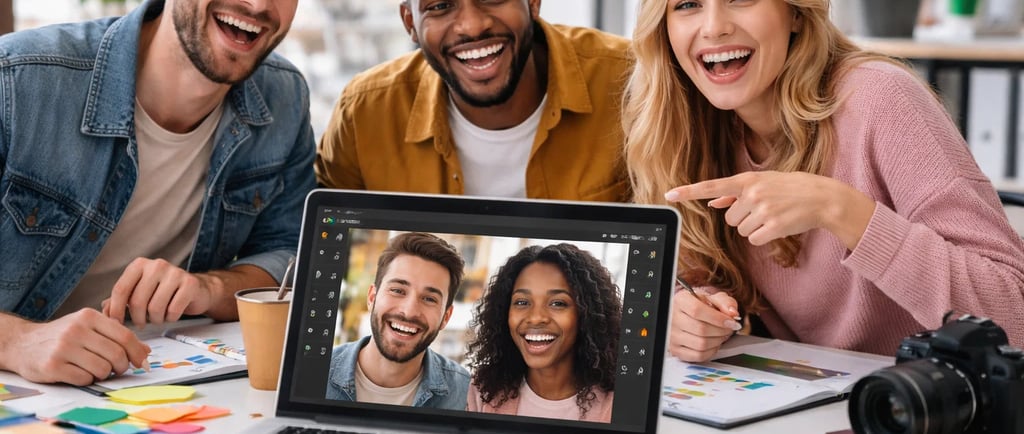
Face Swap for Marketing and Creative Projects
Face swap technology has become an increasingly relevant tool in marketing and creative industries, offering new ways to capture attention and communicate ideas visually.
Powered by artificial intelligence and deep learning, modern face swap solutions can produce realistic results that were previously difficult or time-consuming to achieve. When used thoughtfully, this technology can support storytelling, audience engagement, and creative experimentation. For marketing campaigns, professional vs DIY face swap decisions often determine whether visuals feel credible or amateurish.
Understanding Face Swap Technology in a Professional Context
Face swap technology uses AI-driven algorithms to analyse facial features and replace one face with another in an image or video. These systems rely on machine learning models trained on large datasets to recognise facial structure, expressions, and proportions. The result is a process capable of generating face swaps that appear natural rather than obviously manipulated.
In professional environments, the emphasis is not only on realism but also on consistency and control. Marketing campaigns, creative productions, and branded content often require visuals that align precisely with a brand’s tone, identity, and message. This is where the difference between automated tools and professional face swap services becomes particularly relevant.
Use Cases in Marketing and Advertising
In marketing and advertising, face swap technology is often used to create engaging, memorable visuals that stand out in crowded digital spaces. When applied strategically, it can help brands present familiar concepts in a new way or tailor content to specific audiences.
Some common professional use cases include:
Creative campaigns that use humour or surprise to increase engagement
Personalised advertising, where visuals are adapted for different demographics
Concept demonstrations, allowing brands to test ideas or visuals before full production
Inclusive storytelling, where representation can be explored digitally
In these contexts, accuracy and brand alignment are critical. A poorly executed face swap can undermine credibility, while a well-crafted one can enhance the impact of a campaign and strengthen audience connection.
Automated Face Swap Tools: Benefits and Constraints
Automated face swap tools are often appealing due to their accessibility and speed. They allow users to generate results quickly, making them useful for early experimentation or informal creative exploration. For smaller teams or limited budgets, these tools can offer a starting point.
However, automated tools tend to prioritise efficiency over precision. Limitations often include inconsistent quality, restricted customization, and difficulty handling complex lighting or facial expressions. In marketing contexts, these shortcomings can be noticeable and may affect how a brand is perceived.
Generic outputs are another concern. Automated tools frequently apply the same processing logic to all images, which can result in visuals that feel repetitive or disconnected from a brand’s unique identity.
Why Professional Face Swap Services Are Better Suited for Brands
Professional face swap services are designed to meet higher standards required in marketing and creative projects. By combining AI processing with human oversight, these services offer greater control over quality, tone, and final presentation.
Key advantages include:
Higher visual accuracy, with careful alignment, blending, and refinement
Brand safety, ensuring content aligns with brand values and messaging
Creative collaboration, where ideas are refined rather than processed automatically
Consistency, especially important for campaigns with multiple assets
Professional services are also better equipped to handle sensitive or high-visibility projects, such as campaigns involving public figures, internal brand materials, or long-term creative assets.
Creative Projects Beyond Advertising
Beyond marketing, face swap technology is increasingly used in broader creative projects. Artists, filmmakers, and content creators use it to explore identity, narrative, and visual transformation. In these cases, artistic intent often requires flexibility and fine control—something professional services are more capable of providing than automated tools.
Creative projects may also evolve during production. The ability to revise, refine, and adapt visuals based on feedback is an important advantage of working with professional face swap providers.
Making Face Swap Work for Professional Goals
Using face swap technology effectively in marketing and creative projects requires more than technical capability. It involves understanding context, audience expectations, and ethical responsibility. While automated tools may be suitable for quick tests or informal content, professional face swap services offer reliability, refinement, and accountability.
For brands and creators who value quality and coherence, choosing the right approach to face swap technology can make the difference between content that feels experimental and content that feels intentional.
FaceSwapMe
Private, consent-based AI face and media processing.
Every request is reviewed by a human operator and handled discreetly. Files are deleted after delivery.
© 2026. FaceSwapMe. All rights reserved.
Quick Links
Legal & Privacy
Contact & Availability
contact@face-swap.me
Response time: within 24–48 hours

No data is shared. No content is stored. No processing begins without approval.