Face Swap Privacy Explained: Data, Consent, and Image Handling
Face swap privacy explained. Learn how images are handled, stored, and deleted, and why professional face swap services offer better data protection.
1/26/20264 min read
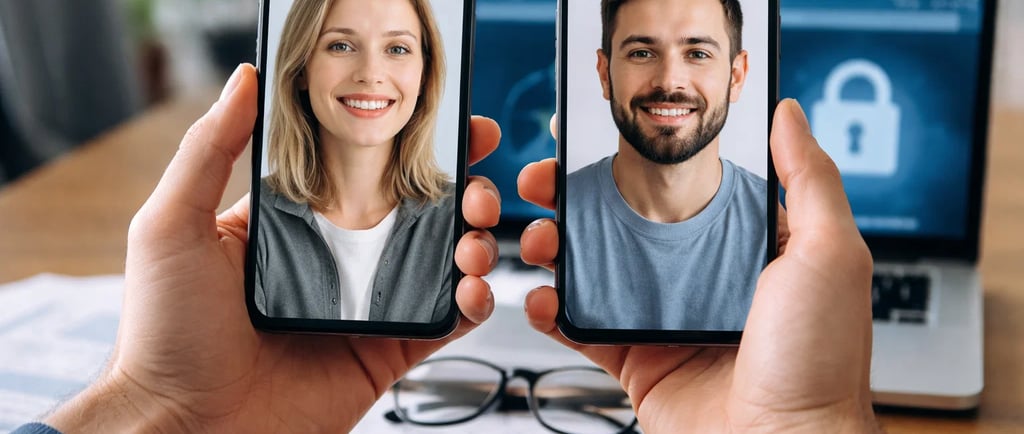
Face Swap Privacy Explained: Data, Consent, and Image Handling
Face swap technology has become increasingly common, offering powerful ways to manipulate images and videos using artificial intelligence. While the visual results can be impressive, the process raises important questions about privacy, consent, and how personal images are handled behind the scenes. Understanding these aspects is essential for anyone considering the use of face swap technology, especially when sensitive or personal images are involved.
Understanding Face Swap Technology and Data Use
Face swap technology relies on advanced machine learning techniques, including deep learning and convolutional neural networks, to analyse and modify facial features. These systems identify facial landmarks—such as eyes, nose, mouth, and contours—and map them onto another image while attempting to preserve realism, lighting, and proportions.
To function, most face swap tools require users to upload images. Once uploaded, the software analyses facial data and processes it to generate the swapped result. In many cases, this process also involves adjusting colour balance, shadows, and angles to create a natural appearance.
The reliance on user-provided images makes data handling a central concern. Depending on the platform, uploaded images may be temporarily stored, processed on remote servers, or even retained for model training or analytics. This variability highlights why transparency in data use is critical when choosing a face swap solution.
Privacy Risks Associated with Face Swap Tools
The growing use of face swap tools has introduced notable privacy risks. One of the most common issues is the lack of clarity around what happens to uploaded images. Users may not always be aware of whether their photos are stored, shared, or reused beyond the original purpose.
Unauthorised use of images is a major concern. Once uploaded, personal photos could potentially be accessed by third parties or used in ways the original owner did not intend. This creates risks ranging from reputational harm to emotional distress, particularly if manipulated images are shared publicly without consent.
Identity misuse is another serious risk. Face swap technology can be exploited to create misleading or deceptive content, sometimes resembling deepfake material. In such cases, individuals may find their likeness used in fabricated scenarios, leading to confusion, misinformation, or even fraud.
Additionally, some automated tools request broad permissions, such as access to cameras, storage, or other personal data. Without strong data protection practices, this access could expose users to further privacy violations.
The Importance of Consent in Face Swapping
Many of the internet users are asking the question "Is AI face swap legal"?
Consent is one of the most critical ethical and legal aspects of face swap technology. Using someone’s likeness without permission—whether for entertainment, marketing, or other purposes—can violate personal rights and, in many jurisdictions, legal standards.
Informed consent means more than accepting a generic terms-of-service agreement. Users should clearly understand how their images will be used, how long they will be stored, and whether they may be shared or altered further. When consent is unclear or absent, the risk of harm increases significantly.
The consequences of non-consensual face swapping can be severe. Individuals may experience emotional distress, reputational damage, or legal complications. As face swap technology becomes more advanced and realistic, ensuring explicit consent becomes increasingly important to maintain trust and ethical standards.
Data Storage and Image Handling Practices
Responsible face swap services place strong emphasis on how images are stored, accessed, and deleted. Clear data retention policies are essential, outlining how long images are kept and under what conditions they are removed from systems.
Secure deletion practices are particularly important. Once a face swap task is completed, images should be permanently removed from storage to reduce the risk of future misuse. Temporary storage, combined with reliable deletion methods, helps limit exposure and protects user privacy.
Access control is another key factor. Reputable services restrict image access to authorised personnel only and implement safeguards to prevent internal misuse. Encryption of data—both during transfer and while stored—adds an additional layer of protection.
Transparency plays a major role in building trust. Services that clearly explain their data handling practices allow users to make informed decisions and feel confident about how their images are treated.
Why Professional Face Swap Services Offer Better Privacy Protection
Professional face swap services are generally better equipped to manage privacy concerns than fully automated tools. By combining AI processing with structured workflows and human oversight, professional services can enforce stricter standards for data protection and ethical use.
These services often operate under established privacy regulations and follow best practices for data security. Images are processed in controlled environments, retained only as long as necessary, and handled according to clear consent policies. This reduces the risks associated with long-term storage or unauthorised reuse.
For users who wonder is face swap safe and value discretion and accountability, here is the place to clarify that professional services provide a safer alternative when dealing with personal or sensitive images.
A More Responsible Way to Use Face Swap Technology
Face swap technology offers powerful creative and practical possibilities, but it also places responsibility on both users and service providers. How images are collected, stored, and handled has a direct impact on privacy, trust, and long-term consequences for the individuals involved.
Automated tools may prioritise speed and convenience, yet they often provide limited transparency around data handling and consent. In contrast, services that focus on controlled workflows, clear privacy practices, and ethical standards create a safer environment for image processing. Understanding these differences allows users to make more informed decisions and reduce unnecessary risks.
Choosing a face swap solution that values consent, secure data handling, and accountability is an essential step toward using this technology in a way that respects both personal privacy and the broader digital ecosystem.
FaceSwapMe
Private, consent-based AI face and media processing.
Every request is reviewed by a human operator and handled discreetly. Files are deleted after delivery.
© 2026. FaceSwapMe. All rights reserved.
Quick Links
Legal & Privacy
Contact & Availability
contact@face-swap.me
Response time: within 24–48 hours

No data is shared. No content is stored. No processing begins without approval.