Talking Photos, Consent, and Responsible Use: What You Should Know
Understand consent requirements and responsible use considerations when creating talking photos with AI-generated animation and voice.
2/1/20267 min read
Introduction to Talking Photos and AI Animation
In recent years, technological advancements have given rise to innovative forms of digital media, one of which is the concept of "talking photos."
This intriguing intersection of photography and artificial intelligence (AI) enables static images to come alive, presenting an entirely new way to engage with visual content. Talking photos utilize AI-driven animations to produce lifelike movements and synchronize the expressions of portraits with recorded voices.
This process encompasses a range of technologies, from motion capture systems to advanced software algorithms that analyze facial features of the individuals in the images.
The remarkable functionality of talking photos lies in their capacity to transcend traditional static imagery by infusing a dynamic element into captured moments.
By analyzing an individual's facial expressions, tone of voice, and gestures, AI animation technology allows for an experience where viewers find themselves enveloped in a more engaging and immersive narrative. Consequently, talking photos have broadened the realms of storytelling, education, and even marketing, paving the way for interactive experiences that capture the audience's attention.
However, as with any technology that captures and manipulates personal images, the implications regarding consent and ethical considerations become paramount. The ease with which one can animate a photo raises pressing questions about the appropriate usage of this technology, especially in contexts where privacy and individual rights could be compromised.
Understanding the principles surrounding consent when creating and sharing talking photos is crucial, as it lays the groundwork for responsible utilization of these innovative tools. Therefore, it is essential to examine the balance between creativity and ethical responsibility in the emerging field of AI-enabled animation.
Understanding Consent in Talking Photos
In the era of advanced technology, the emergence of talking photos—animated portraits that incorporate voice recordings—has opened new avenues for personal expression and sharing.
However, the use of an individual's likeness or voice for such purposes raises critical questions about consent. Understanding consent in this context involves navigating both legal and ethical implications, which are essential for responsible use.
Legal frameworks surrounding consent vary across jurisdictions, but generally, they emphasize the necessity of obtaining explicit permission from individuals whose likeness or voice is being utilized. This is particularly vital when dealing with public figures, as they often have different standards and expectations regarding the use of their images compared to private individuals.
Moreover, the realm of deepfakes and animation technologies necessitates robust consent processes to avoid potential misuse of identity.
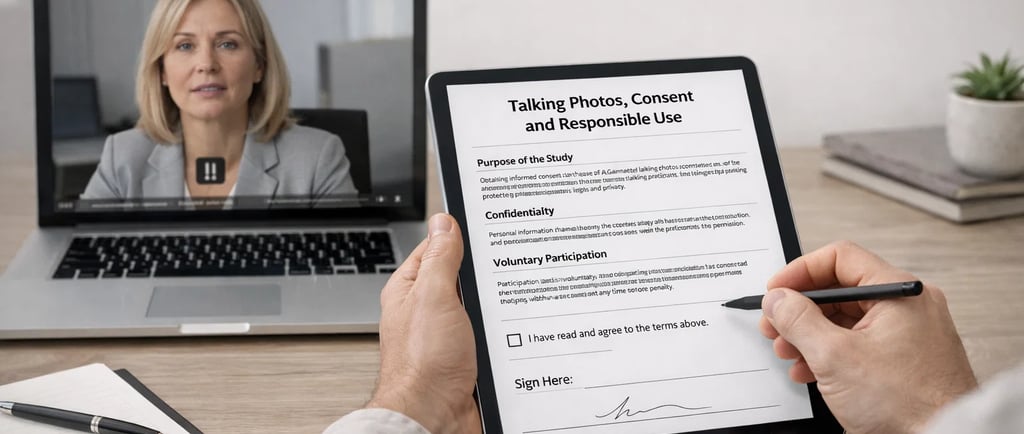
Ethically, the importance of consent cannot be overstated. When creating talking photos, creators must ensure that they respect the rights and autonomy of the individuals involved. Implicit consent—where permission is assumed—is often inadequate, especially when the technology can alter perceptions and present individuals in potentially undesired contexts. Therefore, explicit consent should be obtained, ideally in written form, clarifying how the image and voice will be used.
In addition to explicit consent, it is essential to consider the different forms that consent may take, such as verbal agreements or documented permissions, particularly in collective projects.
Thorough communication with those featured in talking photos contributes to transparency and builds trust, emphasizing a respect for their image and identity.
Impersonation Risks and Ethical Considerations
The advent of talking photos, enhanced by artificial intelligence technology, has ushered in new avenues for creativity and communication. However, this innovation does not come without significant impersonation risks.
When individuals’ likenesses are animated or modified without their explicit consent, serious ethical concerns arise. Such unauthorized use of someone's image can lead to reputational harm and emotional distress, especially when the content produced is misleading or malicious.
For instance, the integration of AI in creating talking photos can easily facilitate impersonation, where an individual may find their likeness used in conjunction with false narratives. This situation poses not only a personal threat to the individual being impersonated but also raises broader societal issues.
Misinformation campaigns often thrive on the misuse of visual content, leading to increased distrust among viewers and undermining social cohesion. Moreover, the use of talking photos in sensitive contexts, such as political discourse or personal relationships, might yield detrimental outcomes for both the impersonated and the public.
Ethical considerations surrounding the use of talking photos must therefore prioritize consent and transparency. Individuals who experience unauthorized impersonation should have access to recourse measures, such as legal avenues to protect their image and identity.
Furthermore, content creators bear the responsibility of ensuring their work does not perpetuate harms associated with impersonation. This involves a commitment to ethical storytelling and a recognition of the potential impact one's work can have on individuals and the broader community.
In light of technological advancements, creating guidelines that reinforce the ethical use of talking photos is imperative to fostering a more responsible and respectful digital environment.
The Role of Consent-Based Workflows
Consent-based workflows are essential systems of operation that ensure individuals provide informed permission before their personal images and likenesses are utilized in any form, particularly in the realm of talking photos and animated portraits.
In the process of creating these dynamic representations, it is vital to establish clear procedures that prioritize respect for personal rights and privacy.
These workflows begin with obtaining explicit consent from individuals who are the subjects of the animated portraits. For instance, before incorporating a person's photo into a talking photo project, creators should provide a detailed explanation of how the image will be used, what the final output will look like, and how it will be shared.
This information empowers individuals to make informed decisions, ensuring that their participation is voluntary and that they fully understand the implications of their consent.
Moreover, consent-based workflows can integrate mechanisms for ongoing dialogue and engagement with the individuals involved.
For example, content creators might implement feedback loops, allowing subjects to review the animated portrait before its release. This practice not only fosters transparency but also builds trust between creators and subjects, reinforcing the ethical obligation of responsible use.
Technological advancements present additional opportunities to enhance consent-based workflows. Utilizing digital platforms that streamline the consent process can help creators securely gather and manage consent forms.
These platforms can offer customizable templates and easy-to-understand consent documentation, ensuring that individuals are well-informed about their rights while fostering an environment of ethical responsibility.
Ultimately, the implementation of consent-based workflows in the creation of talking photos is vital. It not only safeguards the rights of individuals but also promotes a culture of respect and accountability in the growing field of digital imagery.
Importance of Manual Review Processes
As technology continues to advance, many businesses and organizations have started relying heavily on automated systems to manage content, including talking photos.
While these innovations can enhance efficiency, they often come with significant limitations, especially when it comes to safeguarding against misuse. Manual review processes are essential in ensuring that the usage of animated media is ethical and responsible.
Automated systems may be equipped with algorithms designed to identify potential issues, but they are not infallible. These systems lack the nuanced understanding that a human reviewer possesses. For instance, an automated tool may struggle to recognize context, cultural nuances, or the emotional weight that a talking photo may convey.
This is particularly concerning as the potential for misuse is heightened without the discerning judgment of human oversight.
Moreover, talking photos can present unique challenges, such as the risk of manipulation or the dissemination of misleading information. If these animated media are generated without sufficient scrutiny, they can inadvertently lead to harmful outcomes.
Therefore, implementing a comprehensive manual review process acts as a safeguard, ensuring that any talking photo distributed is in adherence to ethical standards and respects the rights of individuals depicted.
Additionally, human oversight fosters accountability. Reviewers can provide explanations and justifications for their decisions, which can enhance transparency within the process.
When organizations openly communicate the rationale behind their content approval systems, they foster trust and credibility with their audience. This becomes increasingly critical in the age of disinformation, where audiences are more discerning about the media they consume.
In summation, while automation assists in content management, it is vital to incorporate manual review processes in the context of talking photos. Human input not only addresses the limitations of automated systems but also reinforces ethical standards and promotes responsible usage of animated media.
Responsible Use of AI Animation Technology
The integration of AI animation technology in creating talking photos has expanded the boundaries of digital content production. However, with this power comes the responsibility to use these tools ethically.
Responsible use of AI technology in animation requires adherence to a set of best practices to ensure that animated content is both respectful and legally compliant.
First and foremost, obtaining consent before using any individual's image is paramount. This involves not only seeking permission from the individuals whose likenesses will be animated but also providing them with adequate information on how their images will be used. Transparency about the purpose and potential reach of the animated content can foster trust and respect among parties involved.
Another important guideline is the consideration of the implications of the content being produced. AI technology allows for the creation of highly realistic animations that could be misinterpreted or misused.
Therefore, it is essential for content creators to assess the context in which the animated material will be shared. Content should be evaluated for possible misrepresentations or negative interpretations, taking into account cultural sensitivities and potential impacts on the individuals represented.
Additionally, organizations should implement robust policies that govern the creation and dissemination of animated content. This includes training staff on ethical standards, the importance of consent, and the responsible use of technology.
Such policies not only help mitigate legal risks but also contribute to a respectful and ethical digital environment. By establishing guidelines that prioritize integrity and respect, individuals and organizations can utilize AI animation technology in a manner that benefits all parties involved.
In conclusion, exercising caution and maintaining ethical standards in the creation, sharing, and consumption of talking photos produced through AI animation technology is essential. By adhering to established best practices, stakeholders can help ensure the responsible use of this emerging technology.
Conclusion: Navigating Consent and Responsibility in the Future of Media
As we reflect on the evolving landscape of media, particularly with the rise of talking photos and artificial intelligence, it is imperative to underscore the significance of consent and ethical responsibility.
The integration of AI technology in photography poses new challenges regarding the informed consent of individuals whose images are captured and altered. Artists, technologists, and consumers alike must recognize that the power of digital media often comes with the burden of ethical considerations.
Through this discussion, we have observed that consent is not merely a legal formality; it is a fundamental human right that must be respected at all levels of media production and consumption.
The dynamics of obtaining and managing consent have become increasingly complex in the digital age, highlighting the necessity for clear communication and robust ethical standards. As creators and users of talking photos navigate this intricate terrain, it is essential to cultivate a culture of respect that prioritizes individual autonomy and privacy.
Furthermore, the advancement of technologies should not detract from our responsibility to engage with these tools mindfully. The ability to generate and share talking photos must be accompanied by a commitment to uphold ethical practices.
This includes being aware of the potential for misuse and the implications for the subjects depicted in our images. Ongoing education about the ethical use of technologies is vital for fostering a conscientious approach in future media practices.
In conclusion, as we advance into an era where talking photos and AI technologies play a prominent role in storytelling and communication, it is essential to champion the principles of consent, ethical consideration, and responsible use.
By doing so, we can create a media landscape that honors individual rights and promotes integrity in the digital age.
FaceSwapMe
Private, consent-based AI face and media processing.
Every request is reviewed by a human operator and handled discreetly. Files are deleted after delivery.
© 2026. FaceSwapMe. All rights reserved.
Quick Links
Legal & Privacy
Contact & Availability
contact@face-swap.me
Response time: within 24–48 hours
No data is shared. No content is stored. No processing begins without approval.